
The right exercise bike is one you can adjust to fit, use comfortably and keep in the space you have. Start with the riding position you want, then compare the exact model’s adjustment range, resistance, working dimensions and support. A large flywheel number or a long programme list cannot tell you whether the bike will fit you.
Examples from the catalogue
These listings illustrate equipment formats, rather than a ranked recommendation. Check the exact model or selected weight, specification and current availability on the product and retailer pages.

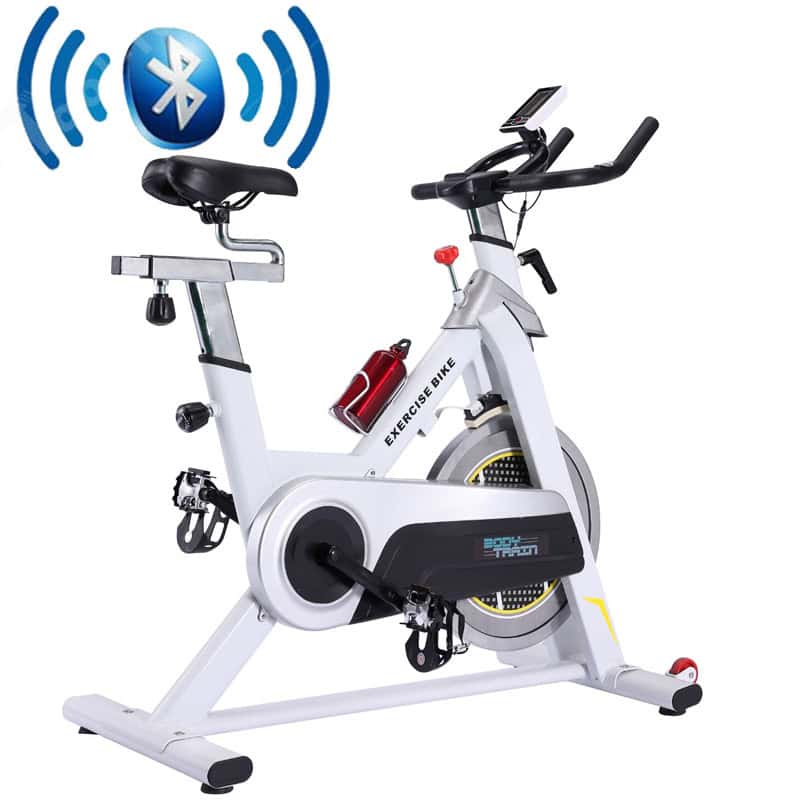
Upright, indoor cycling or recumbent?
These formats put you in different positions. Compare the retailer’s photographs and specifications with how you intend to ride; the word “exercise” does not mean that every bike feels the same.
| Format | What to look for | Main buying check |
|---|---|---|
| Upright bikes | A conventional seated position, console access and resistance controls. | Seat adjustment and reach to the handlebars. |
| Indoor cycling bikes | A cycling-style position with adjustable saddle and handlebars. | Pedal system, adjustment range and resistance mechanism. |
| Recumbent bikes | A seated position with a backrest and pedals farther forward. | Seat travel, step-through access and overall length. |
An indoor cycling bike may have a simpler display than an upright model while offering different adjustment options. A recumbent bike can occupy more floor space. Neither format is automatically the best choice for every rider; check the individual model rather than choosing solely by the category name.
Check rider fit before comparing programmes
Look for the supported user height or inseam range, where the manufacturer provides it. A maximum user weight rating is a separate specification and does not establish that the saddle and pedals will suit your leg length. Ask the retailer if the adjustment range is unclear.
- Saddle: compare vertical adjustment and any fore-and-aft travel.
- Handlebars: check height, reach and whether adjustment requires tools.
- Pedals: confirm straps, toe cages, clip compatibility and which fittings are supplied.
- Access: consider getting on and off, reaching the controls and moving the seat between users.
For a shared bike, establish whether each rider can use the available settings and how quickly the position can be changed. A photograph cannot confirm those measurements.
Understand the resistance and drive system
Read whether the model uses magnetic, friction or air resistance and how the level is controlled. Also check the drive system, maintenance instructions and whether power is needed for resistance adjustment or only for the console. These details vary between models within the same format.
Flywheel mass is one specification, not a complete measure of ride quality. The drive arrangement, resistance control and construction also matter. Noise depends on the mechanism, pedalling, floor and installation; avoid treating “magnetic” or “belt drive” as a guarantee of silence.
Separate useful console features from extras
Decide which information you will actually use: time, cadence, resistance level, distance or a compatible heart-rate reading. Console distance and calorie figures are estimates and may not be directly comparable between brands.
If connected workouts matter, check the named app, device requirements and the functions that work with this exact bike. Bluetooth does not automatically mean automatic resistance control or compatibility with every training app. Establish whether a subscription, separate sensor or tablet is required, and which features work without it.
Measure the working space and delivery route
Use assembled dimensions and the manufacturer’s operating clearance. Leave access around the pedals and enough room to get on and off. For a recumbent bike, allow for seat movement; for any model, check transport wheels, machine weight and where it will be stored.
Compare the boxed dimensions with doorways, stairs and turns. Confirm assembly requirements and delivery terms before ordering. A mat may help protect a suitable floor, but it does not replace the manufacturer’s installation guidance.
Exercise bike buying checklist
- Choose the riding position and confirm the supported rider measurements.
- Check the maximum user rating, seat and handlebar adjustments.
- Confirm pedals, resistance control, power requirements and maintenance.
- Measure the assembled footprint, operating clearance and delivery access.
- Check app compatibility, subscriptions, warranty and spare-part support.
Common buying questions
Is a heavier flywheel always better?
No single number decides the whole ride. Compare the complete drive and resistance system, rider fit and the manufacturer’s intended use alongside flywheel mass.
Which bike is best for a small room?
Compare the actual working dimensions and access clearance. An upright bike may have a shorter footprint than a recumbent model, but a compact bike still needs usable space around it.
Browse all exercise bike types or compare another indoor cardio option in our rowing machine buying guide. For the rest of the room, use the home gym equipment guide.
ShapeShifters is an affiliate catalogue and may earn commission from qualifying purchases through retailer links. Confirm the exact model, current stock, price, delivery and purchase terms with the retailer.
Still deciding between a bike and a rower?
Our exercise bike versus rowing machine article compares movement, working space and everyday setup before you choose a machine format.